AI in Supply Chain: Transforming SMBs with BMW’s Success

AI in Supply Chain Transforming SMBs with BMWs Success

Why AI in Supply Chain Matters for Small Businesses

In today’s competitive landscape, artificial intelligence is rapidly transforming how supply chains operate, even for small and medium-sized businesses (SMBs).

Large corporations like BMW are leading the charge, leveraging AI to streamline procurement, optimize inventory, and improve responsiveness.
For SMBs, this technological shift offers a unique opportunity: harness AI-driven insights to enhance operational efficiency, reduce costs, and gain a significant competitive edge.

As entrepreneurs seek scalable, cost-effective solutions, understanding how AI can be integrated into their supply chains is crucial.
This post aims to inspire small business owners to explore AI tools tailored to their needs, enabling them to compete and thrive in an increasingly digital economy.

Lessons from BMW: AI as a Catalyst for Smarter Procurement and Decision-Making

BMW’s use of AI exemplifies how large automakers are revolutionizing supply chain management.
The company employs advanced AI systems for demand forecasting, supplier selection, risk mitigation, and logistics optimization.
For example, BMW’s predictive analytics models analyze past sales data, economic trends, and market signals to accurately forecast demand, allowing for precise production planning.
This minimizes excess inventory and reduces waste.

In procurement, AI algorithms assess supplier performance based on quality, reliability, and sustainability, streamlining supplier choice and reducing sourcing risks.
Additionally, BMW utilizes AI-powered risk management systems that monitor external factors such as geopolitical issues or natural disasters, enabling proactive responses and minimizing disruptions.  Autonomous logistics, including AI-driven routing and warehouse automation, exemplify how BMW enhances efficiency and responsiveness.

Finally, digital twin technology allows BMW to simulate and optimize its supply chain processes, uncovering bottlenecks before they impact operations.
Small businesses can adapt these strategies—such as demand forecasting, supplier evaluation, and process simulation—to increase agility and efficiency.

Practical AI Tools for Small Business Supply Chain Optimization

Fortunately, numerous accessible AI tools exist for SMBs seeking to emulate BMW’s efficiencies.
Inventory management solutions like TradeGecko and NetSuite use AI to predict demand, drive automatic reordering, and optimize stock levels.
Predictive analytics platforms such as Azure Machine Learning or IBM Watson can analyze sales data, market trends, and customer behavior to inform business decisions.

AI-based supplier evaluation platforms like SAP Ariba utilize intelligent algorithms to assess supplier reliability, quality, and sustainability, simplifying sourcing choices.
For quality assurance, AI-powered computer vision systems are capable of detecting defects early, reducing waste and ensuring product consistency.
Many of these tools are designed to integrate seamlessly with existing workflows, requiring minimal technical expertise—making AI adoption feasible even for small teams.

How SMBs Can Start Using AI for Operational Gains

Embarking on AI integration requires a strategic approach:

    1. Identify Pain Points: Pinpoint areas such as inventory shortages, delays, or supplier management that could benefit from automation and data insights.
    2. Select Suitable Tools: Choose AI solutions aligned with your specific challenges and budget.
      Consult vendors that specialize in small business solutions to ensure ease of use and scalability.
    3. Implement Gradually: Start with pilot projects focusing on critical processes, then expand deployment as you learn and see results.
    4. Collect Quality Data: Accurate, consistent data is key to AI success.
      Invest in your data collection processes and ensure data cleanliness.
    5. Collaborate with Vendors: Work closely with technology providers for training, customization, and ongoing support.
    6. Measure and Improve: Track key performance indicators, evaluate the impact of AI tools, and make iterative improvements to maximize ROI.

Real Use Cases & Early Success Stories

Many SMBs are beginning to realize the benefits of AI-powered supply chain tools.
For example, a small retailer using AI-driven inventory forecasting reduced stockouts by 25% and cut excess stock by 30%, expediting cash flow and customer satisfaction.
A regional manufacturer automated parts inspection with AI-based vision systems, resulting in fewer defects and lower rework costs.
In another case, a logistics startup employed AI to optimize delivery routes,
increasing on-time deliveries by 20% and decreasing fuel costs.
These examples demonstrate that measurable improvements in operational efficiency, cost savings, and customer satisfaction are well within reach for SMBs, when leveraging the right AI tools.

Why AI-Powered Supply Chain Solutions Are a Must for SMB Growth

Implementing AI in supply chain management provides strategic advantages—such as greater agility, reduced operational costs, more accurate decision-making, and enhanced customer experience.
AI enables SMBs to respond swiftly to market fluctuations, optimize inventory,
and improve supplier relationships.
It also opens avenues for innovation in product development and service delivery.
As AI solutions become more affordable and user-friendly, they are no longer exclusive to large enterprises.
Small businesses adopting AI now can unlock efficiencies, scale faster,
and position themselves for long-term growth.
Investing in AI is, therefore, not just an operational improvement but a strategic imperative for future-ready SMBs.

Getting started with AI may seem daunting, but by setting clear goals,
choosing the right tools, and gradually integrating technologies into existing workflows, every small business can harness the power of AI to transform its supply chain and boost competitiveness.

How AI and Amazon Vulcan Can Transform Small Business Logistics

How AI and Amazon Vulcan Can Transform Small Business Logistics

How Amazon Vulcan Could Transform Small Business Logistics

In the fast-evolving world of e-commerce and retail, efficient logistics are crucial for success. Amazon Vulcan, an advanced warehouse robot integrating artificial intelligence and tactile sensing, exemplifies cutting-edge automation technology.
Originally designed to streamline Amazon’s massive fulfillment centers, such technologies are now increasingly accessible to small and medium-sized businesses (SMBs).
This shift offers solopreneurs and small enterprise owners the opportunity to enhance order fulfillment speed, boost accuracy, and reduce costs—without exorbitant investments.
By adopting such innovative tools, even small businesses can compete more effectively with larger players, ensuring faster delivery times and improved customer satisfaction.

What Makes Amazon Vulcan Unique and Relevant for SMBs

Amazon Vulcan boasts several features that make it especially appealing for small business logistics:

    • AI-powered item recognition: Vulcan can identify and locate items efficiently, minimizing errors and speeding up the picking process.
    • Tactile sensing: This allows Vulcan to handle items delicately and accurately, which is critical for fragile or varied products.
    • Automation of warehouse tasks: From sorting to packing, Vulcan automates labor-intensive activities, freeing up time and reducing human error.

These technological advancements translate into a more streamlined inventory management system, fewer mistakes, and increased operational efficiency.
Importantly, such sophisticated robotics are becoming increasingly scalable and affordable, making them viable options for SMBs looking to grow without proportionally increasing overhead.

Practical Benefits for Solopreneurs and Small Businesses

Implementing warehouse automation offers tangible benefits, including:

    • Faster order processing: Automated picking and packing reduce fulfillment times, enabling you to deliver orders more quickly and elevate your customer experience.
    • Reduced labor costs: Automating repetitive tasks minimizes the need for extensive staffing, helping you lower operational expenses.
    • Improved accuracy: Advanced recognition and handling systems decrease inventory errors, enhancing stock management and reducing costly mistakes.
    • Scalability: Small e-commerce or retail businesses can expand their operations without a proportional increase in warehouse costs or complexity.

For example, an independent online clothing retailer can leverage automated systems to manage peak seasons efficiently, ensuring timely deliveries and maintaining high customer satisfaction.

How Small Businesses Can Start Leveraging Warehouse Automation

Adopting automation doesn’t have to be overwhelming. Here are actionable steps:

    1. Assess current processes: Review your inventory and order fulfillment workflows to identify bottlenecks and automation opportunities.
    2. Explore partnerships: Reach out to robotics and automation solution providers that cater to SMBs, or consider cloud-based automation services.
    3. Start small: Pilot automation in key areas like order picking or stock management to evaluate impact before full-scale deployment.
    4. Evaluate ROI: Track the improvements in speed, accuracy, and cost savings over time, considering the potential for future expansion.

With thoughtful planning, the initial investment can be offset by operational efficiencies and enhanced customer satisfaction, paving the way for sustainable growth.

Success Outlook: How Warehouse Robots Can Drive Small Business Growth

Early adopters of robotic automation have reported measurable improvements:

    • Reduced fulfillment times significantly, enabling faster delivery and enhanced customer loyalty.
    • Higher order accuracy, decreasing return rates and increasing trust.
    • Operational cost savings that make scaling easier without sacrificing quality.

Such benefits empower SMBs to compete more effectively, providing faster, more reliable service that can establish a strong market presence.

Why an SMB Should Keep an Eye on Warehouse Automation Advancements

Emerging developments in AI-powered robotics offer scalable, practical benefits for small businesses. Integrating these tools can streamline operations, lower costs, and set the stage for expansion.
The good news is that you don’t have to overhaul your entire system overnight. Starting with strategic automation initiatives allows you to incrementally improve efficiencies.
Now is an ideal time for entrepreneurs to explore smarter fulfillment options, ensuring they stay competitive and ready for future growth.

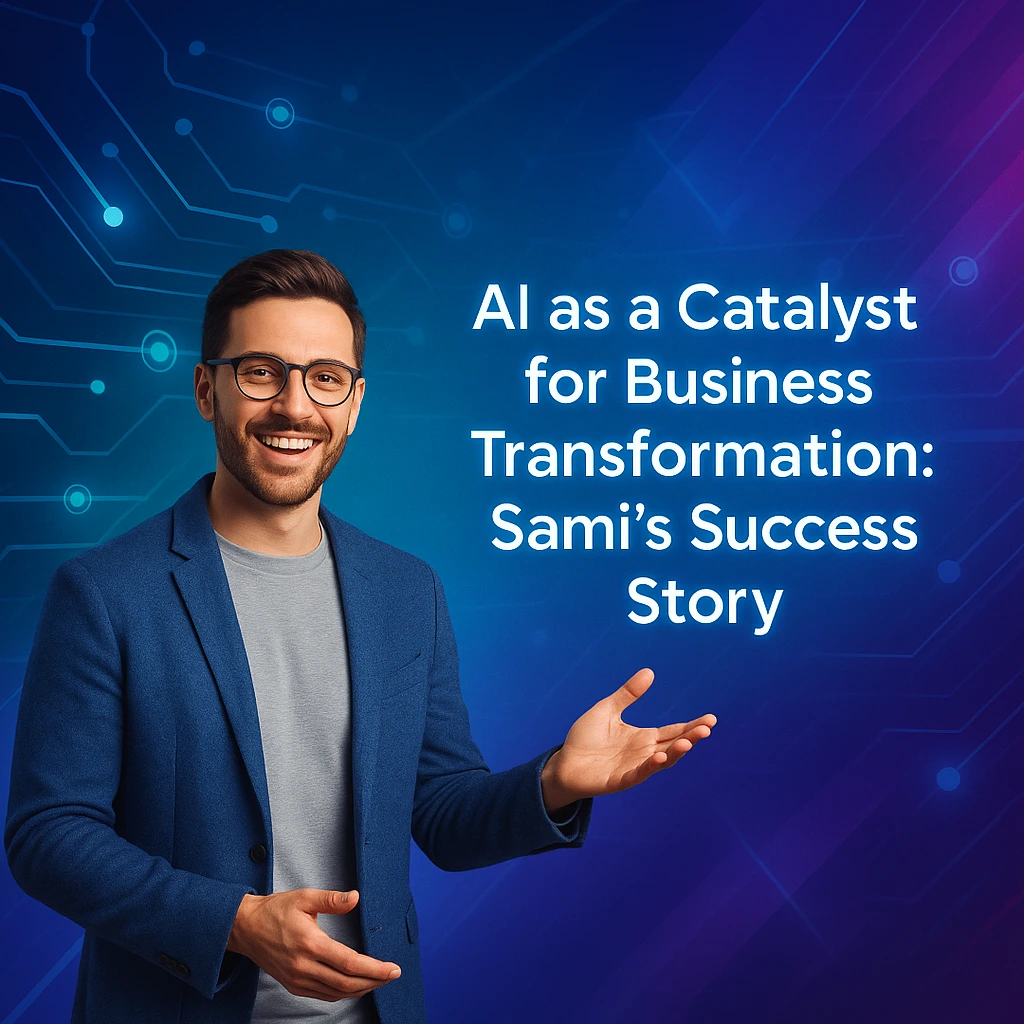
AI as a Catalyst for Business Transformation: Sami’s Success Story

AI as a Catalyst for Business Transformation: Sami’s Success Story

Overview

In an era where AI is touted as a powerful tool for boosting productivity, few have turned the promise into a practical reality.
Sami, a software solutions manager at Clinitex, did exactly that.
Without a formal background in machine learning, he developed a system of AI agents that now handle 50% of his workload — autonomously, 24/7.
His innovations span internal business tools, marketing automation, and even commercial mobile apps.

Company Background

Clinitex is a professional cleaning services company.
Sami’s role involves identifying digital needs within the company and developing software solutions both for office staff and on-the-ground cleaning agents.
His responsibilities cover technical exploration, product support, and the end-to-end delivery of internal tools.

The Challenge

Creating bespoke internal software through external agencies was prohibitively expensive — a single intranet rebuild quote exceeded €100,000.
Sami needed a way to build scalable, secure, and cost-effective solutions without relying on external development firms.
Additionally, corporate concerns over data security prevented the use of major proprietary cloud-based models like GPT.

The Solution: Building an Internal AI Team

Sami transformed an old crypto-mining PC into a dedicated AI workstation and developed a modular AI agent framework — entirely self-hosted.
Using open-source tools like Anything LLM, LangChain, and Crew AI, he assembled virtual teams that operate much like human project teams:

    • Research Agent
    • Dev Agent
    • QA/Tester Agent
    • Manager Agent
    • Prompt Manager Agent

Each agent has a clear role, works on isolated tasks, and is guided by a centralized prompt management system that intelligently splits and distributes task instructions.

Implementation Examples

1. Internal Intranet Overhaul

Using vision models and Figma screenshots, Sami converted a full redesign brief into executable code using AI agents and the Cursor code editor.
The system parsed the prompts, generated a React-based frontend, and delivered a functional internal platform within 3 days — replacing a €100,000 project with an in-house solution.

2. Google Ads Automation

An AI-driven keyword optimization pipeline was built using Crew AI.
A team of agents crawled competitor data, classified keywords by B2B/B2C context, and updated ad campaigns — with no human intervention beyond final campaign approvals.
This drastically reduced time spent on digital marketing.

3. Corporate Directory Sync App

To avoid paying €5,000 annually for a phone directory syncing solution, Sami built an Android app that integrates Microsoft Active Directory into company phones.
The project was completed in 2 hours, delivering a scalable Kotlin application using AI-assisted development and Bluetooth syncing.

4. Commercial Mobile App Success

Outside of work, Sami reverse-engineered the Bluetooth protocol of his e-bike (Super73) and built a native iOS app in a single weekend using his agent team.
The app now offers features even the manufacturer doesn’t — GPS tracking, offline control, and custom riding modes.
It topped the paid app rankings on Google Play and generated $10,000+ in sales in two months.

Results

    • Time Saved: Cut delivery time of complex software projects from weeks to days.
    • Cost Reduction: Replaced €100K+ contracts with in-house AI solutions.
    • Scalability: System now handles half of Sami’s workload with continuous improvement.
    • Commercial Revenue: Generated over $10K in two months with an AI-built mobile app.

Lessons Learned

    • Open-Source Wins: Hosting models locally ensured GDPR compliance and full control over sensitive data.
    • Prompt Engineering is King: The success of multi-agent systems hinged on clear, layered instructions.
    • No-Code ≠ No-Effort: While Sami didn’t need to be a coding expert, mastering AI workflows and data structuring was essential.
    • AI is an Amplifier: It won’t replace developers but drastically extends their capabilities.

Conclusion

Sami’s case proves that AI isn’t just a futuristic dream—it’s a pragmatic tool that, when applied smartly, can revolutionize internal business processes and even create new revenue streams.
His story is a blueprint for anyone looking to supercharge their productivity and break free from traditional software development constraints — no PhD required.

Watch the interview

This video is hosted on YouTube. It will load automatically after you accept cookies.