HeyGen’s Avatar IV Pushes the Limits of AI Animation

HeyGen Avatar IV - pushing the limits of AI animation

Table of Contents Toggle What’s New with Avatar IV? Who Can Use It? Why This Matters Final Thoughts

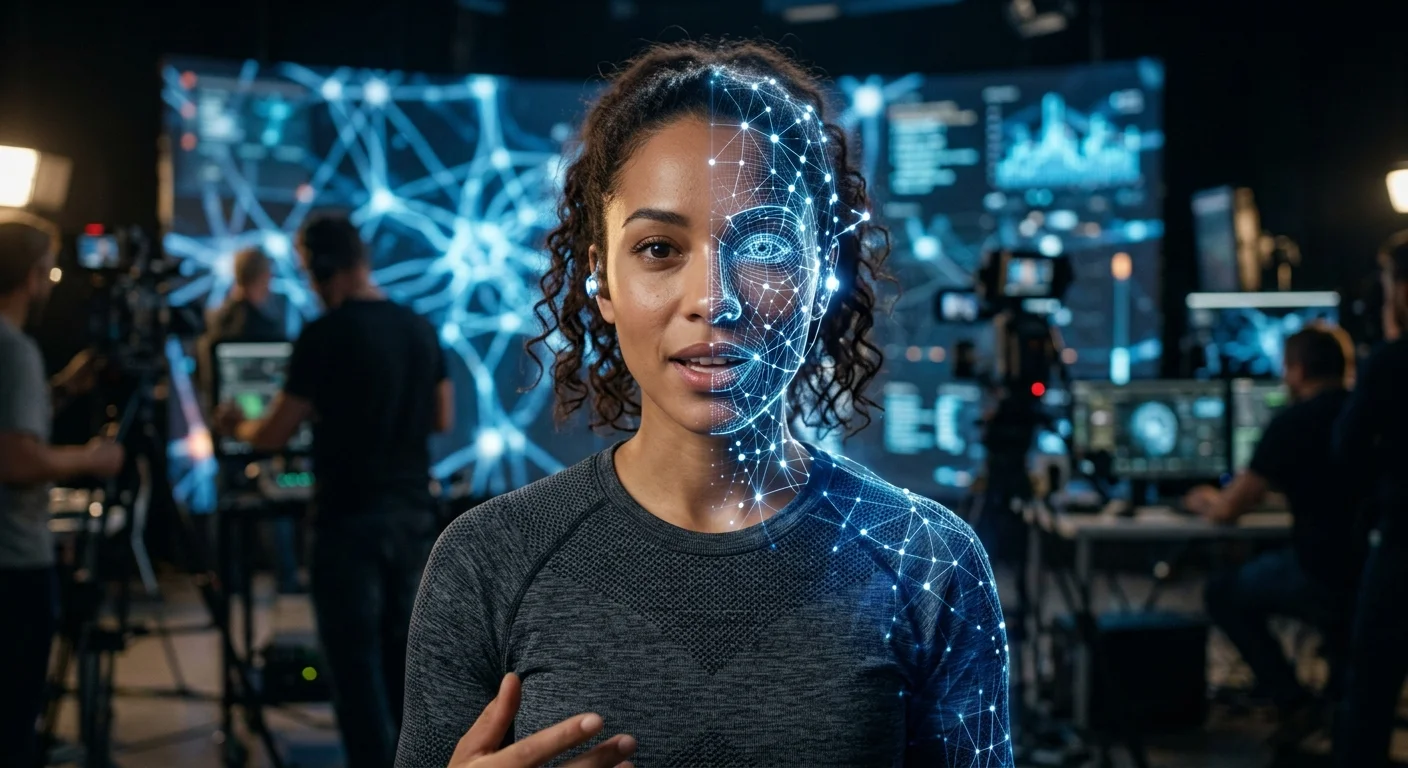
In late April 2025, HeyGen dropped Avatar IV — and honestly, it’s a pretty big deal for anyone making video content with AI. The idea is simple: take one photo, add a voice, and get a lifelike animated video out the other end.

Your browser does not support the video tag. const video = document.getElementById(‘myVideo’); video.addEventListener(‘loadedmetadata’, () => { video.currentTime = 0.01; });

We’re talking realistic facial expressions, hand gestures, even those tiny micro-movements that make someone look *actually human* on screen. It’s the kind of tool that opens doors for creators who don’t have access to studios, actors, or motion capture rigs.

“One photo. One voice. Infinite possibilities.”

What’s New with Avatar IV?

A. Diffusion-Inspired Audio-to-Expression Engine

Here’s where it gets interesting. Avatar IV uses a diffusion-inspired engine that listens to your voice — the tone, the rhythm, the emotion behind your words — and translates all of that into facial expressions and movement. Not canned animations. Actual responsive motion that matches what you’re saying and *how* you’re saying it.

Old avatar systems? They needed pre-recorded motions or complicated setups. Avatar IV just needs your audio. That’s it. The result looks surprisingly natural.

B. Single Image Input + Voice Script

This is the part that caught my attention. You upload one photo. One. Then you feed it a voice script, and Avatar IV builds a full animated video from that.

No motion capture suit. No green screen. No stack of reference images from twelve different angles.

It even handles different camera perspectives — profile shots, dynamic views — so you’re not locked into the same flat, head-on framing every time. That flexibility makes a real difference for storytelling.

C. Multi-Format Support

You’re not stuck with the classic “floating head” format either. Avatar IV supports portrait, half-body, and full-body animations. Want a full-body avatar walking through a presentation? You can do that. Need a quick half-body clip for Instagram? Done.

It’s the kind of versatility that actually matters when you’re creating for different platforms with different expectations.

Who Can Use It?

A. Content Creators & Influencers

Don’t want to be on camera today? Don’t have to be. Avatar IV lets influencers and creators pump out professional-looking videos using a customizable avatar that represents their brand. Tutorials, promos, product reviews — all without setting up a ring light.

And because generation is fast, keeping up with a posting schedule gets way easier.

B. Podcasters & Streamers

Got an audio-only podcast? Turn it into something visual. Avatar IV syncs animated avatars to your voice, which means your listeners can now *watch* your content too. Guests who want to stay anonymous? No problem — give them an avatar.

Live streamers can take it further. Imagine a virtual co-host that reacts in real-time. That’s a whole new layer of interactivity right there.

C. Game Developers

I’ve seen game devs spend weeks on character animation. Avatar IV can speed that up dramatically — auto lip-syncing NPC dialogue, generating cinematic cut-scenes, animating characters from static concept art. Less time animating, more time building the actual game.

D. Experimental Creators

This is where things get wild. Artists can take a painting, a sketch, even a surreal digital piece, and bring it to life. Voice-driven animation on top of static art opens up some genuinely weird and wonderful creative possibilities — multimedia installations, music videos, interactive exhibits.

Why This Matters

We’ve gone from static, hand-crafted content to dynamic, cinematic AI video. And you don’t need to be a tech expert to use it. That’s the real shift here.

Think about it — AI avatars are getting close to indistinguishable from real people. What does that mean for storytelling? For branding? For online education? The possibilities are enormous, and we’re barely scratching the surface.

The creative sandbox just got a lot bigger. Marketers can build personalized narratives faster. Educators can create engaging visual content without a production budget. And independent creators can compete with studios that have ten times their resources.

Final Thoughts

HeyGen’s Avatar IV shows where AI video is headed: faster production, lower costs, and results that look genuinely real. It’s not perfect — but it’s a massive step forward.

What’s next? Word is Avatar V might bring full-body tracking, deeper emotional range, and real-time customization. That’s going to blur the line between human and virtual even more.

If you’re curious, I’d say give Avatar IV a try. Play around with it. See what it can do for your content.

Stay tuned for a deep-dive test of Avatar IV — see firsthand how it can elevate your content and storytelling!

Looking for more AI tools? Browse our complete AI Tools directory with 169+ tools across every business category. Explore: Best AI Apps in 2026.

LIGHTTRICKS 🎥 new open-source video model LTXV-13B

Lighttricks open-source AI video model LTXV-13B

Lighttricks just dropped something worth paying attention to — an open-source AI video model called **LTXV-13B**. And honestly? It’s a big deal.

Not because it’s another AI video tool (we’ve got plenty of those). But because it runs on hardware you probably already own.

The Details

The secret sauce here is **multiscale rendering**. Instead of generating a video all at once, LTXV-13B builds it in layers — starting rough, then adding detail progressively. The result is smoother, more consistent output that actually looks professional.

But here’s what really caught my eye.

Most AI video models need beefy enterprise GPUs that cost thousands. LTXV-13B? It runs on **consumer-grade hardware**. Your gaming PC can handle it. That’s a massive shift for independent creators and small teams who’ve been priced out of this space.

New Features Boost Creativity and Control

  • Precise camera motion control: Simulate pans, dollies, and tracking shots with real accuracy — no more hoping the AI guesses what you want.
  • Keyframe editing: Make adjustments at specific points in the timeline. Want the lighting to shift at the 3-second mark? You can do that.
  • Multi-shot sequencing tools: String together multiple shots into cohesive sequences without jumping between apps.

Oh, and it’s **open source**. Free for any company making under $10 million in revenue. That’s not a token gesture — that’s genuine accessibility.

Lighttricks also partnered with **Getty Images** and **Shutterstock** for training data, which means the model isn’t just fast. It’s trained on diverse, high-quality content.

Why It Matters

I’ve been watching AI video tools evolve over the past couple years, and the jump from where we were 12 months ago to where LTXV-13B sits now is staggering.

We’re talking **up to 30x faster** than previous models.

Think about what that means in practice. An idea hits you at 9 AM. By 9:15, you’ve got a polished video draft. No waiting. No rendering overnight. Just rapid iteration until you get exactly what you want.

And because it runs on standard hardware with optimized algorithms, you’re not burning cash on cloud GPU rentals either.

The real shift though? **Smaller creators can now compete.** A one-person studio with a decent PC can produce video content that would’ve required a production team and expensive software just two years ago. That’s already changing what shows up in our feeds — more diverse voices, weirder ideas, stuff that big studios would never greenlight.

Future Outlook

Where’s this all heading? A few things I expect to see:

  • More intuitive creative controls — AI video tools that feel less like coding and more like sketching.
  • Direct integration into tools people already use daily. Imagine generating B-roll right inside your email client or presentation software.
  • Wider adoption beyond marketing and entertainment — education, training, VR experiences, you name it.
  • Harder conversations about ethics, content ownership, and deepfakes. These matter, and they’re not going away.

The trajectory is clear. These tools get better every quarter.

What This Means for You

Lighttricks’ launch of **LTXV-13B** marks a turning point. Professional-quality video generation is no longer locked behind expensive hardware and enterprise contracts. It’s open source. It’s fast. And it runs on your machine.

If you’ve been waiting for the right moment to start experimenting with AI video — this is it. The tools are here, they’re free (or close to it), and they’re only getting better.

Looking for more AI tools? Browse our complete AI Tools directory with 169+ tools across every business category. See our full comparison: Best AI Video Generation Tools in 2026.

AI as a Catalyst for Business Transformation: Sami’s Success Story

AI as a catalyst for business transformation - success story

Overview

In an era where AI is touted as a powerful tool for boosting productivity, few have turned the promise into a practical reality.
Sami, a software solutions manager at Clinitex, did exactly that.
Without a formal background in machine learning, he developed a system of AI agents that now handle 50% of his workload — autonomously, 24/7.
His innovations span internal business tools, marketing automation, and even commercial mobile apps.

Company Background

Clinitex is a professional cleaning services company.
Sami’s role involves identifying digital needs within the company and developing software solutions both for office staff and on-the-ground cleaning agents.
His responsibilities cover technical exploration, product support, and the end-to-end delivery of internal tools.

The Challenge

Creating bespoke internal software through external agencies was prohibitively expensive — a single intranet rebuild quote exceeded €100,000.
Sami needed a way to build scalable, secure, and cost-effective solutions without relying on external development firms.
Additionally, corporate concerns over data security prevented the use of major proprietary cloud-based models like GPT.

The Solution: Building an Internal AI Team

Sami transformed an old crypto-mining PC into a dedicated AI workstation and developed a modular AI agent framework — entirely self-hosted.
Using open-source tools like Anything LLM, LangChain, and Crew AI, he assembled virtual teams that operate much like human project teams:

    • Research Agent
    • Dev Agent
    • QA/Tester Agent
    • Manager Agent
    • Prompt Manager Agent

Each agent has a clear role, works on isolated tasks, and is guided by a centralized prompt management system that intelligently splits and distributes task instructions.

Implementation Examples

1. Internal Intranet Overhaul

Using vision models and Figma screenshots, Sami converted a full redesign brief into executable code using AI agents and the Cursor code editor.
The system parsed the prompts, generated a React-based frontend, and delivered a functional internal platform within 3 days — replacing a €100,000 project with an in-house solution.

2. Google Ads Automation

An AI-driven keyword optimization pipeline was built using Crew AI.
A team of agents crawled competitor data, classified keywords by B2B/B2C context, and updated ad campaigns — with no human intervention beyond final campaign approvals.
This drastically reduced time spent on digital marketing.

3. Corporate Directory Sync App

To avoid paying €5,000 annually for a phone directory syncing solution, Sami built an Android app that integrates Microsoft Active Directory into company phones.
The project was completed in 2 hours, delivering a scalable Kotlin application using AI-assisted development and Bluetooth syncing.

4. Commercial Mobile App Success

Outside of work, Sami reverse-engineered the Bluetooth protocol of his e-bike (Super73) and built a native iOS app in a single weekend using his agent team.
The app now offers features even the manufacturer doesn’t — GPS tracking, offline control, and custom riding modes.
It topped the paid app rankings on Google Play and generated $10,000+ in sales in two months.

Results

    • Time Saved: Cut delivery time of complex software projects from weeks to days.
    • Cost Reduction: Replaced €100K+ contracts with in-house AI solutions.
    • Scalability: System now handles half of Sami’s workload with continuous improvement.
    • Commercial Revenue: Generated over $10K in two months with an AI-built mobile app.

Lessons Learned

    • Open-Source Wins: Hosting models locally ensured GDPR compliance and full control over sensitive data.
    • Prompt Engineering is King: The success of multi-agent systems hinged on clear, layered instructions.
    • No-Code ≠ No-Effort: While Sami didn’t need to be a coding expert, mastering AI workflows and data structuring was essential.
    • AI is an Amplifier: It won’t replace developers but drastically extends their capabilities.

Conclusion

Sami’s case proves that AI isn’t just a futuristic dream—it’s a pragmatic tool that, when applied smartly, can revolutionize internal business processes and even create new revenue streams.
His story is a blueprint for anyone looking to supercharge their productivity and break free from traditional software development constraints — no PhD required.

Watch the interview

This video is hosted on YouTube. It will load automatically after you accept cookies.

Looking for more AI tools? Browse our complete AI Tools directory with 169+ tools across every business category.

See also: Best AI Tools for Business in 2026.