

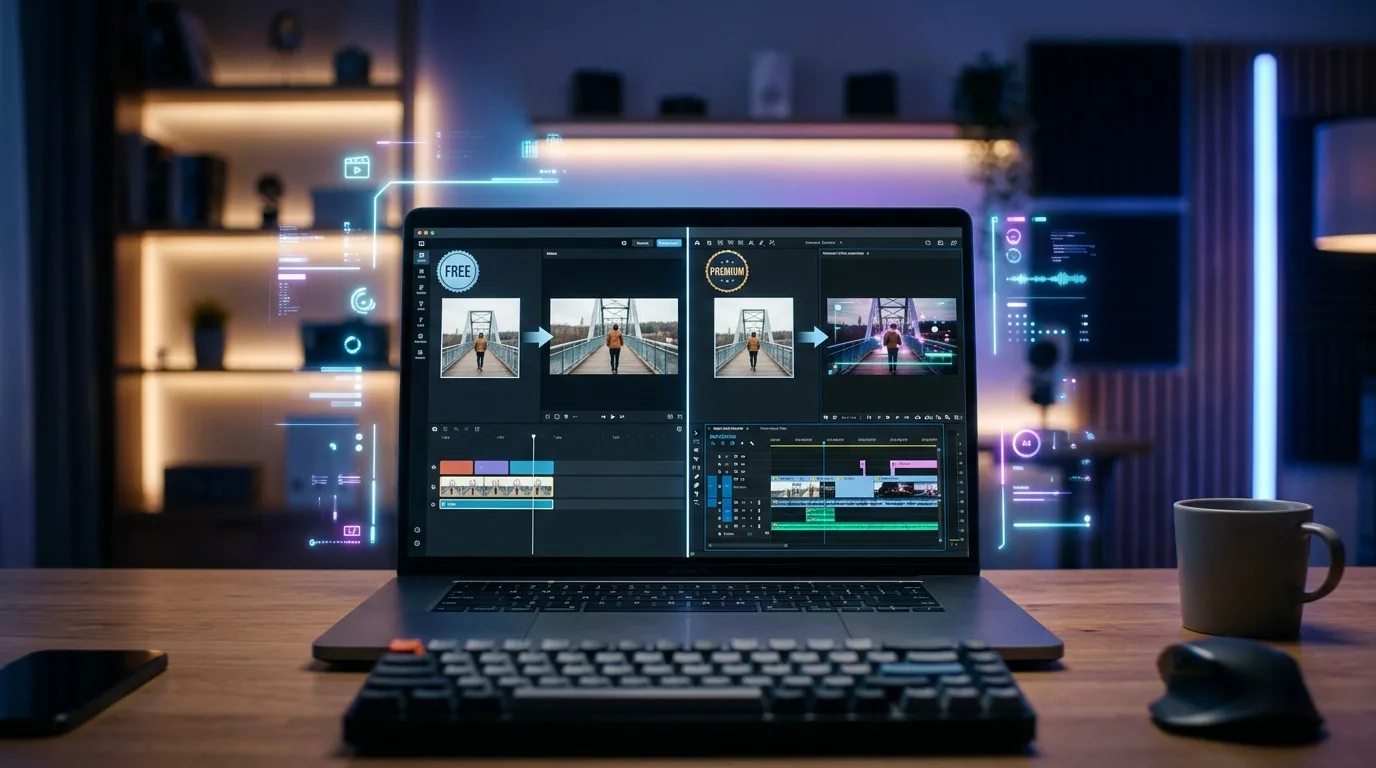
Free AI image-to-video tools have gotten ridiculously good in 2026. But here’s the thing — “good enough” depends entirely on what you’re doing with them.
If you’re a solopreneur cranking out social media content, free tools might be all you need. If you’re producing client work or running ads, the paid tiers could save you hours of frustration. We tested the most popular options side by side to find out exactly where that line is.
This is the companion piece to our 7 Best Free AI Image-to-Video Tools roundup. That one ranks the free options — this one shows you when it’s worth paying.
What We Actually Tested
We took the same source image — a product flat-lay on a white background — and ran it through both the free and paid tiers of six major platforms. We looked at three things that actually matter for business use:

- Output quality — resolution, motion smoothness, artifact count
- Control — can you direct the motion, set duration, choose aspect ratio?
- Speed and limits — how many clips per day, how long do you wait?
The Quick Verdict: Free vs Paid at a Glance
| Feature | Free Tier (Typical) | Paid Tier (Typical) |
|---|---|---|
| Resolution | 720p–1080p | 1080p–4K |
| Clip length | 2–4 seconds | 5–15 seconds |
| Daily generations | 3–10 | 50–unlimited |
| Watermark | Usually yes | No |
| Motion control | Basic or none | Camera paths, keyframes |
| Commercial license | Varies (check TOS) | Almost always included |
Where Free Tools Actually Win
Let’s be honest — free tiers have gotten surprisingly capable. Here’s where they genuinely hold their own:
Social Media Content
If you’re making short clips for Instagram Reels, TikTok, or Twitter/X, the 2–4 second limit on free tiers isn’t a dealbreaker. It’s actually the sweet spot for attention-grabbing content. Tools like RenderLion and VideoGen both produce clean, share-ready clips on their free plans.
Blog and Website Headers
A subtle animation on a hero image? Free tools nail this. The motion doesn’t need to be complex — a gentle zoom or parallax effect is enough. We found that even the most basic free generators produce results that look polished in an embedded web player.
Prototyping and Testing Ideas
Before you commit 0–50/month to a paid plan, free tiers let you test whether AI-generated video actually works for your content strategy. Smart move: use free tools to validate the concept, then upgrade only when you’ve proven the ROI.
Where Paid Tools Pull Ahead
Here’s where the money starts making sense:
Client-Facing Work
Watermarks are a non-starter for professional deliverables. Beyond that, paid tiers from tools like Synthesia and HeyGen give you much finer control over motion, transitions, and output format. When a client is paying you, the 0/month for a pro plan pays for itself on the first project.
Ad Creative at Scale
Running A/B tests on video ads? You need volume. Free tiers cap you at a handful of generations per day — nowhere near enough for serious ad testing. Creatify and Quickads AI both offer batch generation on paid plans that make rapid creative iteration actually feasible.
Longer-Form Content
Product demos, explainer clips, YouTube intros — anything over 5 seconds needs a paid plan. The quality gap widens significantly with duration. Free generators tend to produce artifacts and motion drift in longer clips, while paid models maintain coherence throughout.
Brand Consistency
Paid tools often include style presets, custom aspect ratios, and the ability to match your brand’s visual language. If you’re producing content regularly, this consistency compounds — your audience starts recognizing your look, which is harder to achieve with free tools’ limited customization.
Tool-by-Tool Breakdown
Here’s how specific platforms stack up across their free and paid offerings:
InVideo AI — The free tier gives you surprisingly good text-to-video with auto-editing. The paid tier (5/month) removes watermarks, adds 1080p export, and unlocks premium stock footage. Best for: content creators who want a full editing suite, not just image-to-video.
Zebracat — Free plan includes basic image-to-video with 720p output. The Pro plan adds 4K, longer clips, and batch processing. Best for: e-commerce brands that need product videos at scale.
Hypernatural — Generous free tier with decent quality. Paid plans add priority rendering and advanced motion controls. Best for: solopreneurs testing the waters before committing.
Katalist AI — Free plan is limited but functional for storyboarding. Paid unlocks full video generation with scene control. Best for: creative professionals who need shot-by-shot planning.
Akool — Free tier covers basic transformations. Paid plans add face swap, avatar creation, and commercial licensing. Best for: marketers who need personalized video content.
Descript — Not a pure image-to-video tool, but its AI editing features blur the line. Free plan is limited; the 4/month plan is where it gets powerful. Best for: podcasters and video editors who want AI assist, not full AI generation.
The Decision Framework
Skip the paid tier if:
- You’re making content for your own social feeds
- Clips under 4 seconds work for your use case
- You’re still figuring out if AI video fits your workflow
- Watermarks don’t bother you (or your audience)
Upgrade to paid if:
- You’re producing for clients or running ads
- You need 5+ second clips with consistent quality
- Volume matters — you’re generating 10+ videos per week
- Brand consistency and commercial licensing are non-negotiable
Our Recommendation
Start free, upgrade intentionally. Every tool on this list offers a free tier worth trying. Use it until you hit a specific wall — watermarks killing your conversions, clip length limiting your ideas, generation caps slowing your output. That wall is your signal to upgrade, and it’s different for everyone.
If you want to explore all your options, browse our complete AI tools directory — we’ve tested and listed over 169 tools across every category, including the best free AI image-to-video generators.
The gap between free and paid AI video tools is shrinking fast. What cost $50/month a year ago is free today. But for now, the paid tiers still earn their keep when quality, control, and volume actually matter for your bottom line.