How to Build Your First ChatGPT Agent (Step-by-Step for Non-Developers)

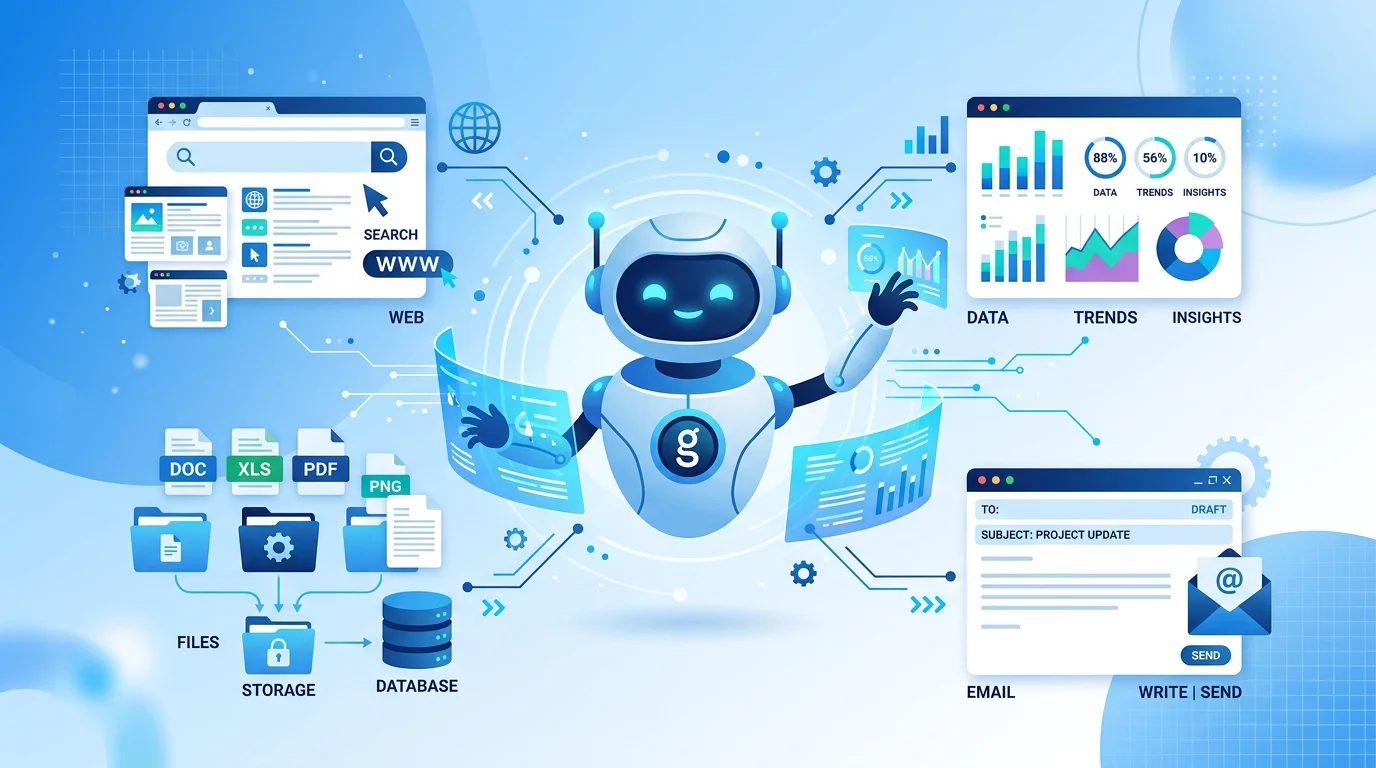
Illustration of a ChatGPT AI agent automating web search, data analysis, file storage and email tasks

ChatGPT agents are one of the most powerful features OpenAI has rolled out — and you don’t need to write a single line of code to build one.

I built my first agent in about 20 minutes. It now handles research tasks that used to eat up half my morning. And the whole process was shockingly simple.

If you’ve been curious about ChatGPT agents but assumed they’re only for developers — this guide is for you. I’ll walk you through building your first one, step by step.

What Exactly Is a ChatGPT Agent?

Quick refresher: a ChatGPT agent is an AI that can take actions on its own. It doesn’t just answer questions — it browses the web, runs code, reads files, and chains multiple steps together to complete a task.

Think of it as the difference between asking someone a question and actually hiring them to do the work.

If you want the full breakdown of what agents are and why they matter, check out our ChatGPT Agents Explainer. This post is all about the how.

What You’ll Need Before You Start

Not much, honestly:

  • A ChatGPT Plus, Team, or Enterprise subscription — agents aren’t available on the free plan (yet)
  • A clear task in mind — something repetitive that you’d love to hand off
  • About 20-30 minutes — your first agent won’t be perfect, but it’ll be functional

That’s it. No API keys, no coding environment, no technical setup.

Step 1: Pick the Right Task

This is where most people mess up. They try to build an agent that does everything — and end up with something that does nothing well.

Good first agent tasks:

  • Researching competitors and summarizing findings
  • Analyzing a spreadsheet and pulling out key insights
  • Drafting email responses based on specific criteria
  • Monitoring a topic and creating daily briefings
  • Reformatting data from one structure to another

Bad first agent tasks:

  • Anything requiring real-time access to private systems
  • Tasks that need perfect accuracy every single time (agents can hallucinate)
  • Multi-day projects with dozens of moving parts

Start small. One task, one clear outcome. You can always expand later.

Step 2: Open ChatGPT and Start a New Agent

Here’s the actual process:

  1. Go to ChatGPT and click the “Explore” or “Agents” option in the sidebar
  2. Click “Create” to start a new agent
  3. You’ll see two tabs: Create (guided) and Configure (manual). Start with Configure — it gives you more control

The Configure tab is where the magic happens. You’ll set up four things: name, instructions, conversation starters, and capabilities.

Step 3: Write Clear Instructions

This is the most important step. Your agent’s instructions are its playbook — the better they are, the better it performs.

Here’s a template that works well:

Role: You are a [specific role] that helps me [specific outcome].
Process: When I give you [input type], you should [step 1], then [step 2], then [step 3].
Output format: Always deliver results as [format — bullet points, table, email draft, etc.].
Rules: [Any constraints — word count limits, tone requirements, things to avoid].

Real example — here’s what I used for a competitor research agent:

“You are a competitive intelligence analyst. When I give you a company name, browse their website, check their recent blog posts and social media, and deliver a briefing that includes: what they’re selling, their pricing model, their content strategy, and 3 things they’re doing better than me. Keep it under 500 words. Be direct — no fluff.”

Notice how specific that is? Vague instructions = vague results. Tell the agent exactly what you want.

Step 4: Enable the Right Capabilities

ChatGPT agents can use several built-in tools:

  • Web browsing — lets the agent search the internet and visit URLs
  • Code interpreter — runs Python code for data analysis, charts, file processing
  • File search — reads through uploaded documents
  • Image generation — creates visuals with DALL-E

For most business tasks, you’ll want web browsing and code interpreter enabled. Only turn on what you actually need — extra capabilities can sometimes distract the agent.

Step 5: Add Knowledge Files (Optional but Powerful)

This is the secret weapon most people skip.

You can upload files that your agent uses as reference material — your brand guidelines, product catalog, pricing sheet, previous reports, whatever’s relevant.

The agent will search through these files when completing tasks, which means it gives answers grounded in your actual business data instead of generic internet knowledge.

Pro tip: Upload your best previous work as examples. If you want the agent to write emails like you do, give it 10 emails you’ve already written. Pattern matching is what these models do best.

Step 6: Test and Iterate

Here’s the reality — your first version won’t be perfect. That’s fine. The iteration process is fast:

  1. Run your agent with a real task
  2. Note what it gets wrong or could do better
  3. Go back to Configure and tighten the instructions
  4. Test again

Usually takes 2-3 rounds before you’ve got something solid. Each round only takes a few minutes.

Common fixes:

  • Output too long? Add a word limit to your instructions
  • Missing context? Upload more reference files
  • Wrong format? Be more explicit about the output structure
  • Too generic? Add specific examples of what “good” looks like

Step 7: Save and Share

Once you’re happy with your agent:

  • Save it as private if it’s just for you
  • Share with your team if you’re on a Team or Enterprise plan
  • Publish to the GPT Store if you think others would find it useful

Your agent now lives in your sidebar, ready to use whenever you need it.

3 Agent Ideas to Get You Started

Need inspiration? Here are three agents I use regularly as a solopreneur:

1. The Meeting Prep Agent
Upload your calendar notes and company info before a call. The agent researches the person/company, summarizes their recent activity, and gives you 5 talking points. Saves me 15 minutes per meeting.

2. The Content Brief Agent
Give it a keyword, and it researches the top-ranking pages, identifies content gaps, and drafts a structured brief with suggested headings, word count targets, and angle recommendations.

3. The Invoice Processor
Upload a batch of invoices (PDF AI or image). The agent extracts vendor names, amounts, dates, and categories — then exports everything as a clean spreadsheet. What used to take an hour now takes 2 minutes.

If you’re looking for more AI tools that can automate your workflow, browse our AI tools directory — we’ve reviewed over 160 tools across every category.

Common Mistakes to Avoid

Don‗t make your instructions too vague. “Help me with marketing” will get you garbage. “Analyze this landing page and suggest 5 specific copy improvements based on conversion best practices” will get you gold.

Don‗t skip the testing phase. Your first draft of instructions is a hypothesis, not a finished product.

Don‗t expect perfection. Agents are assistants, not replacements. Review their output before acting on it — especially for anything client-facing or financial.

Don‗t overload a single agent. If you need help with research and email writing and data analysis — build three agents, not one. Specialized agents outperform generalist ones every time.

What’s Next?

Once you’ve built your first agent and seen what’s possible, you’ll start seeing agent opportunities everywhere. That spreadsheet you manually update every week? Agent. Those customer inquiry responses you copy-paste? Agent. That competitor monitoring you keep forgetting to do? Agent.

The key is starting with one. Get it working. Then build the next one.

For more on how ChatGPT agents work under the hood — including the difference between agents and custom GPTs — read our full ChatGPT Agents Explained guide.

And if you want to explore AI tools that handle specific business tasks out of the box (no agent-building required), check out tools like Fireflies AI for meeting transcription, Tidio for customer support automation, or Dante AI for building custom AI chatbots.

Best AI Video Creation Tools: 2025 vs 2026 — What Actually Improved

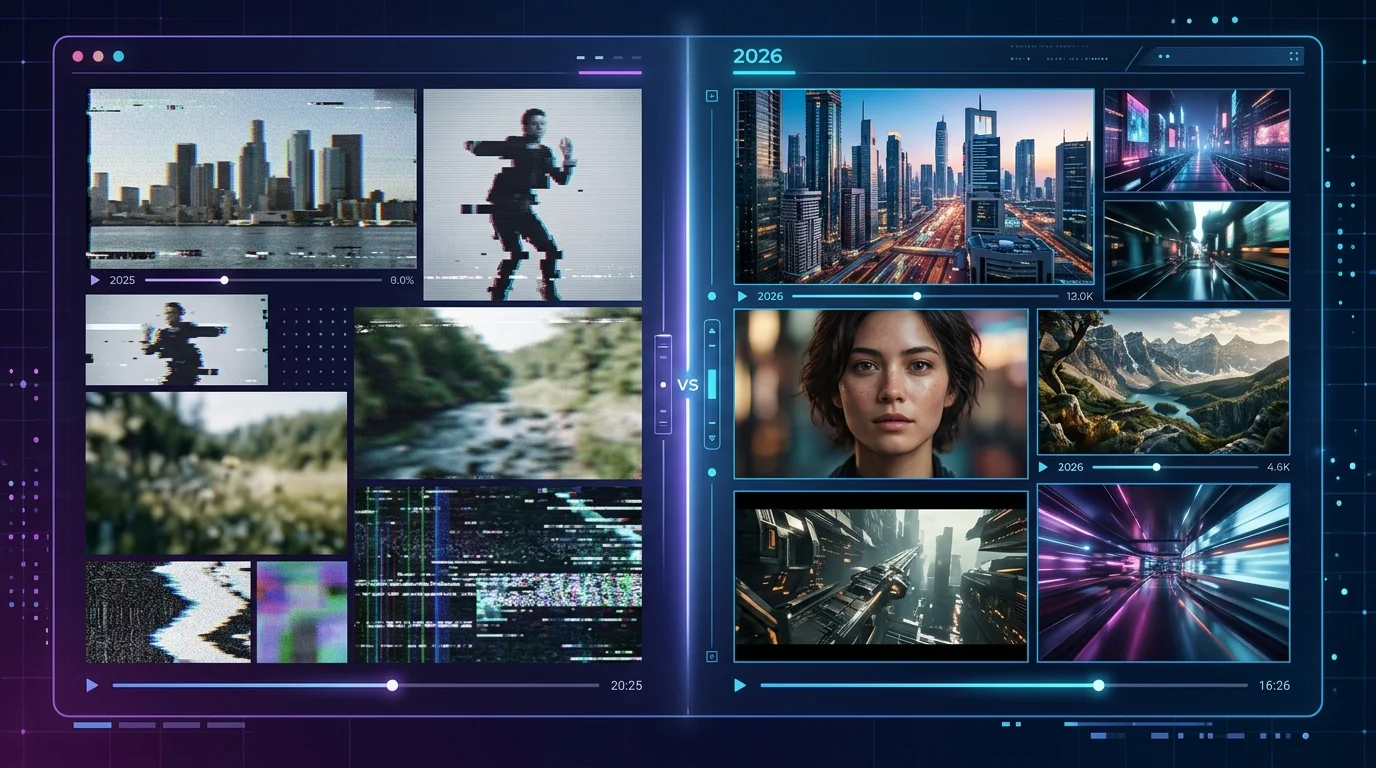
AI video creation tools comparison 2025 vs 2026 - split view showing evolution from glitchy to cinematic quality

The AI Video Landscape Changed More in 12 Months Than the Previous 5 Years Combined

If you tested AI video creation tools in early 2025, you probably walked away impressed but skeptical. The clips were short. The motion was janky. Hands looked like melted candles. And anything longer than 4 seconds? Forget it.

Fast-forward to 2026, and it’s a completely different story. I’ve been testing these tools across both years — and the gap between where we were and where we are now is staggering.

This isn’t another “best tools” listicle. (We already wrote that one.) Instead, this is a head-to-head look at what actually improved, what’s still broken, and which tools made the biggest leaps — so you can decide if it’s finally time to bring AI video into your workflow.

What AI Video Tools Looked Like in 2025

Let’s set the baseline. In early-to-mid 2025, here’s what the best AI video creation tools could do:

  • Clip length: 4–10 seconds was the norm. Runway Gen-2 topped out around 16 seconds.
  • Resolution: 720p was standard. 1080p was possible but slow and expensive.
  • Motion quality: Objects would warp mid-motion. Camera movements were inconsistent. Physics? Largely imaginary.
  • Audio: Completely absent. You’d generate video, then add voiceover or music separately.
  • Faces: Hit-or-miss. Talking heads worked okay in Synthesia and HeyGen, but text-to-video faces were unreliable.
  • Pricing: Most tools charged per second or per generation. Costs added up fast.

The tools that existed in 2025 — Runway Gen-2, Pika 1.0, Stable Video Diffusion, early Kling — were impressive demos. But for actual business use? Most solopreneurs and small teams stuck with stock footage and screen recordings.

What Changed in 2026: The 7 Biggest Improvements

Here’s what’s genuinely different now — not incremental updates, but fundamental shifts in what these tools can do.

1. Video Length Went From Seconds to Minutes

This was the single biggest bottleneck in 2025. Google Veo 3.1 now generates clips up to 60 seconds in a single pass. Kling 3.0 does 30 seconds natively. Even InVideo AI stitches together multi-minute videos from a single prompt.

In 2025, you’d need to chain multiple 4-second clips together — and good luck getting them to look consistent. That hack is basically dead now.

2. Audio Generation Got Baked In

This one caught everyone off guard. Google Veo 3 launched with native audio generation — dialogue, sound effects, ambient noise, all generated alongside the video. No more silent clips that need post-production.

In 2025, audio was a completely separate step. You’d use one tool for video, another for voiceover, another for music. Now the best tools handle it in one shot.

3. Motion Physics Actually Work

Kling 3.0 made the biggest leap here. Water flows realistically. Objects have weight. Hair and fabric move naturally. The “AI jitter” — that weird wobble where things don’t quite obey gravity — is mostly gone at the top end.

In 2025, even the best outputs had a dreamlike quality where physics were more of a suggestion than a rule. You could spot AI video from across the room.

4. Business-Ready Tools Matured

Synthesia and HeyGen were already decent for avatar-based videos in 2025, but they’ve become genuinely impressive in 2026. Lip-sync accuracy improved dramatically. Custom avatars look more natural. And both now support real-time avatar generation — you can create a training video in minutes, not hours.

Creatify went from a niche ad tool to a full marketing video platform. Script-to-video in under 2 minutes with AI avatars, product shots, and auto-optimized formats for every social platform.

5. Editing Became Conversational

Descript pioneered the “edit video like a document” concept, but 2026 took it further. Now you can tell tools like Runway Gen-4 to “make the sky more dramatic” or “slow down the camera pan” using natural language — and they actually do it.

In 2025, editing meant re-generating from scratch or jumping into traditional video editors. The iteration loop was painfully slow.

6. Image-to-Video Became Reliable

Taking a still image and animating it was technically possible in 2025. In practice, it was a coin flip. Pika and Runway would animate maybe 1 in 3 images convincingly.

Now? Kling 3.0 and Hailuo handle image-to-video with surprising consistency. Product photos come alive. Portraits start talking. Even complex scenes with multiple subjects maintain coherence. (We covered the best free image-to-video tools separately if you want the deep dive.)

7. Pricing Dropped — Significantly

Competition did its thing. Where 2025 tools charged $0.50–$2.00 per generation, many 2026 tools offer subscription models with generous monthly limits. InVideo AI gives you unlimited exports on paid plans. VideoGen offers solid free tiers for faceless content. The barrier to entry is lower than it’s ever been.

Tool-by-Tool: 2025 vs 2026 Comparison

Here’s how the major players evolved. I’m comparing their state in mid-2025 versus where they are now in 2026.

Tool 2025 State 2026 State Biggest Improvement
Google Veo Veo 1 (limited access, short clips) Veo 3.1 (60s clips, native audio, 1080p) Audio generation + length
Runway Gen-2 (16s max, 720p, no audio) Gen-4 (natural language editing, better motion) Conversational editing
Kling v1.0 (decent motion, 5s clips) 3.0 (30s clips, realistic physics) Motion physics + length
Pika 1.0 (fun effects, inconsistent quality) 2.2 (social media optimized, faster) Speed + consistency
Synthesia Good avatars, stiff movement Natural avatars, real-time generation Avatar realism
HeyGen Solid lip-sync, limited customization Custom avatars, instant video translation Personalization + localization
InVideo AI Template-based, AI-assisted editing Full prompt-to-video, multi-minute output End-to-end AI generation
Hailuo (MiniMax) Early beta, limited access Fast cinematic output, strong image-to-video Speed + quality
Descript AI editing features, some generation Full AI video creation + editing suite Unified creation + editing

What’s Still Not Great (Even in 2026)

I don’t want to paint an unrealistically rosy picture. There are still real limitations:

  • Consistency across scenes: Generating a single clip? Great. Generating 10 clips that look like they belong in the same video? Still requires manual work.
  • Fine control: You can guide the AI, but you can’t direct it like a cinematographer. Specific compositions and exact timing remain hit-or-miss.
  • Long-form narrative: Nobody’s generating a coherent 10-minute video from a single prompt yet. You’re still assembling clips.
  • Text in video: On-screen text rendering is better but not perfect. Expect occasional garbled letters.
  • Ethical guardrails: Deepfake concerns are real. Most tools have stricter content policies now — which is good, but also means some legitimate creative uses get blocked.

Which Tools Are Worth Switching To (Or Starting With)

Based on testing both years, here’s my honest take:

If you tried AI video in 2025 and gave up: Try again. Seriously. The tools that frustrated you 12 months ago are fundamentally different now. Start with InVideo AI if you want the lowest learning curve, or Google Veo 3.1 if you want the most impressive raw output.

If you need business videos (training, demos, sales): Synthesia and HeyGen are no-brainers. The avatar quality jump from 2025 to 2026 is dramatic enough that clients won’t think “that’s AI” anymore.

If you’re a content creator on a budget: VideoGen and Pika 2.2 offer the best free-to-affordable ratio. Pair them with Descript for editing and you’ve got a legitimate production pipeline for under $50/month.

If you want cutting-edge quality: Google Veo 3.1 and Kling 3.0 are the current benchmarks. Neither is cheap, but the output quality would’ve been science fiction 18 months ago.

For the full rundown of what’s available right now, check our complete guide to the 11 best AI video generation tools in 2026. And if you’re exploring AI tools beyond video, browse the full Aixelerate AI tools directory — we’ve got 169+ tools reviewed and categorized.

The Bottom Line

The best AI video creation tools in 2025 were promising experiments. The best ones in 2026 are legitimate production tools. That’s not marketing hype — it’s what happens when an entire industry iterates as fast as this one has.

The question isn’t “is AI video good enough yet?” anymore. It’s “which tool fits my specific workflow?” And honestly? That’s a much better problem to have.

The 15 Best AI Tools for Small Business in 2026 (By Category)

Best AI tools for small business in 2026 - workspace with AI icons illustration

You don’t need a Fortune 500 budget to use AI in your business. Not anymore.

The tools on this list are built for small teams — solopreneurs, freelancers, and SMBs who need real results without hiring a data science department. I’ve tested dozens of AI tools over the past year, and these 15 are the ones that actually move the needle.

No fluff. No “honorable mentions.” Just the best AI tools for small business in 2026, organized by what they actually help you do.

Content Creation & Writing

1. Blaze.ai — Best for Solo Content Teams

Blaze.ai is what happens when someone finally builds an AI writing tool that understands small business content workflows. It doesn’t just generate text — it handles your entire content pipeline from ideation to publishing.

What makes it stand out: brand voice consistency across every piece of content. Write a blog post, repurpose it into social captions, and everything still sounds like you. For solopreneurs juggling 12 platforms, that’s a game-changer.

2. Frase — Best for SEO-First Content

If you’re writing blog content to rank (and you should be), Frase combines keyword research, content briefs, and AI writing into one workspace. It analyzes what’s already ranking for your target keyword, then helps you create something better.

The SERP analysis alone saves hours of manual research. Pair it with your own expertise and you’ve got content that actually competes.

3. Junia AI — Best for Long-Form Blog Posts

Junia AI specializes in long-form, SEO-optimized articles that don’t read like a robot wrote them. It handles research, outlines, and full drafts — all while keeping your target keywords naturally woven throughout.

Perfect for small businesses that need consistent blog output but can’t dedicate 8 hours per article.

Marketing & Advertising

4. AdCreative AI — Best for Ad Design

Running ads without a designer? AdCreative AI generates conversion-optimized ad creatives in minutes. Feed it your brand assets, tell it your platform, and it produces variations that actually look professional.

The AI scores each creative based on predicted performance — so you’re not guessing which version to run. That’s the kind of edge small businesses rarely get.

5. GetResponse — Best for Email Marketing

GetResponse has quietly become one of the most complete AI-powered email marketing platforms for small businesses. The AI email generator writes subject lines and body copy, while the automation builder handles drip sequences without you touching it.

Landing pages, webinars, email — it’s an all-in-one marketing hub that punches way above its price point.

6. ContentStudio — Best for Social Media Management

Managing social media for a small business is exhausting. ContentStudio uses AI to generate captions, suggest optimal posting times, and curate relevant content — all from one dashboard.

It covers Facebook, Instagram, Twitter, LinkedIn, Pinterest, and more. Schedule a week’s worth of posts in 30 minutes instead of 3 hours.

Customer Support & Sales

7. Chatbase — Best for AI Chatbots

Want a chatbot that actually knows your business? Chatbase lets you train a custom AI chatbot on your own data — your website, docs, FAQs, whatever. It answers customer questions accurately instead of giving generic responses.

Setup takes minutes, not weeks. And it integrates with your website, WhatsApp, Slack — pretty much anywhere your customers already are.

8. Seamless AI — Best for Lead Generation

Finding B2B leads manually is a grind. Seamless AI uses artificial intelligence to find verified contact information — emails, phone numbers, company data — in real time.

For small businesses doing outbound sales, this replaces hours of LinkedIn stalking with a search that takes seconds. The data accuracy is what sets it apart from cheaper alternatives.

9. Instantly AI — Best for Cold Email Outreach

Instantly AI is the cold email platform built for scale. It manages multiple sending accounts, warms them up automatically, and uses AI to optimize your sequences for better deliverability and response rates.

If you’re doing any kind of outreach — sales, partnerships, link building — this tool pays for itself within the first campaign.

Video & Visual Content

10. HeyGen — Best for AI Video Creation

Creating professional videos used to mean cameras, lighting, and editing software. HeyGen lets you generate studio-quality videos with AI avatars that look and sound natural.

Product demos, training videos, social content — all without stepping in front of a camera. The avatar quality in 2026 is genuinely impressive. (I had to double-check some weren’t real people.)

11. InVideo AI — Best for Quick Social Videos

InVideo AI takes a different approach — describe what you want and it builds the entire video. Script, stock footage, transitions, music, voiceover. All from a text prompt.

It’s not going to win a film festival, but for social media content and YouTube shorts? It’s ridiculously fast and the output is more than good enough.

SEO & Website

12. SurferSEO — Best for On-Page Optimization

SurferSEO is the gold standard for on-page SEO optimization. Its content editor analyzes top-ranking pages and gives you a real-time score as you write — word count, keyword density, headings structure, everything.

Small businesses that combine SurferSEO with good writing consistently outrank bigger competitors. It’s one of those tools that makes the ROI obvious within weeks.

13. Durable — Best for AI Website Building

Need a website yesterday? Durable builds a complete business website in under a minute using AI. It generates copy, selects images, and creates a design that doesn’t look like a template.

It’s not for complex web apps — but for service businesses, consultants, and freelancers who need a professional online presence fast, nothing beats it.

Productivity & Operations

14. Reclaim.ai — Best for Smart Scheduling

Reclaim.ai uses AI to automatically schedule your priorities around meetings, habits, and tasks. It defends your focus time, reschedules when conflicts arise, and learns your work patterns over time.

If your calendar controls your life (and you’re a small business owner, so it probably does), this tool gives you hours back every week.

15. Taskade — Best for AI-Powered Project Management

Taskade combines project management, note-taking, and AI agents into one workspace. Create tasks, generate workflows, brainstorm with AI — all in a tool that’s fast and doesn’t overwhelm you with features.

For small teams (or solo operators), it replaces the Notion + Trello + ChatGPT stack with something more focused.

How to Choose the Right AI Tools for Your Business

Here’s the thing — you don’t need all 15 of these. In fact, trying to adopt too many tools at once is how most small businesses waste money on AI.

Start with your biggest bottleneck:

  • Spending too much time on content? Start with Blaze.ai or Frase.
  • Need more leads? Seamless AI + Instantly is a powerful combo.
  • Customer support eating your day? Set up Chatbase in an afternoon.
  • Marketing on a shoestring? ContentStudio + AdCreative AI stretch every dollar.

Pick one or two tools, get them working, then expand. That’s how you actually get ROI from AI — not by subscribing to everything at once.

The Bottom Line

AI tools in 2026 aren’t just for tech companies anymore. Every tool on this list is affordable, easy to set up, and designed for people who don’t have a tech team.

The small businesses winning right now aren’t the ones with the biggest budgets — they’re the ones using AI to do more with less. These 15 tools are how they’re doing it.

Want to explore more options? Browse our complete AI tools directory — we’ve reviewed and categorized 169+ tools so you can find exactly what your business needs.